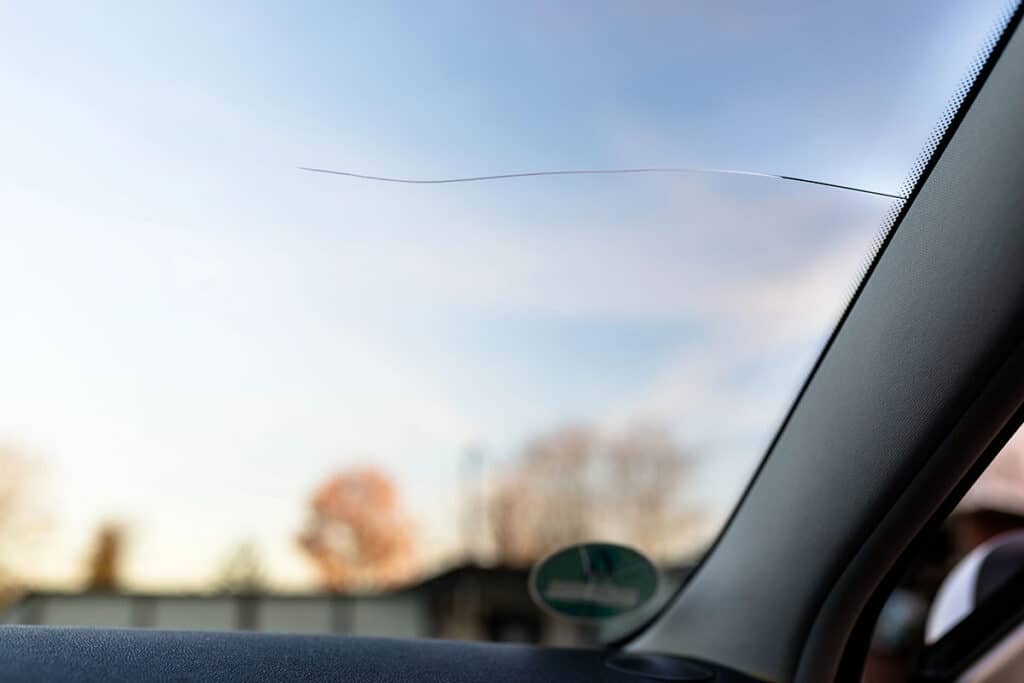
Driving through Texas during the summer means facing intense sunshine and soaring outdoor temperatures. While most vehicle owners focus on protecting their paint, battery, or cooling system from the warm climate, your windshield often takes the brunt of the heat. A minor stone chip that seemed completely harmless in April can suddenly turn into a massive spiderweb crack across your line of sight by July.
This breakdown is not an accident or simple bad luck. It is the direct result of a scientific process known as thermal shock. Understanding how extreme heat impacts auto glass helps you protect your vehicle, maintain structural safety, and save hundreds of dollars in avoidable replacement costs.
Table of Contents
What Is Thermal Shock in Automotive Glass?
To understand why auto glass fails under extreme conditions, it helps to examine how windshields are built. Unlike standard home window glass, modern automotive windshields are made of laminated safety glass. This design consists of two layers of curved glass held together by a flexible inner layer of polyvinyl butyral (PVB). The PVB layer acts as a bonding core that holds the structure together if the glass breaks, preventing sharp shards from entering the cabin.
Thermal shock occurs when a material experiences a sudden, drastic change in temperature across its surface. When glass heats up, its molecules expand. When glass cools, those same molecules contract. Laminated glass is built to handle gradual temperature changes without issue. However, when one section of the glass expands or contracts much faster than another, stress develops along the surface.
In an intact windshield, this stress spreads evenly across the entire surface. When a chip or small stress crack is already present, the structural integrity of the glass is compromised. The small flaw creates a focal point where thermal tension concentrates. As the surrounding glass expands or contracts, that focused pressure forces the tiny fracture to split further, driving a rapid spread across the panel.
The Texas Heat Factor: Rapid Temperature Shifts
Texas summers create the ideal storm for thermal stress. When ambient outdoor temperatures hit 95°F to 100°F, sunlight shining directly onto parked vehicles elevates surface temperatures far beyond the air reading. A dark dashboard absorbs solar radiation, heating the air right against the inside of the glass.
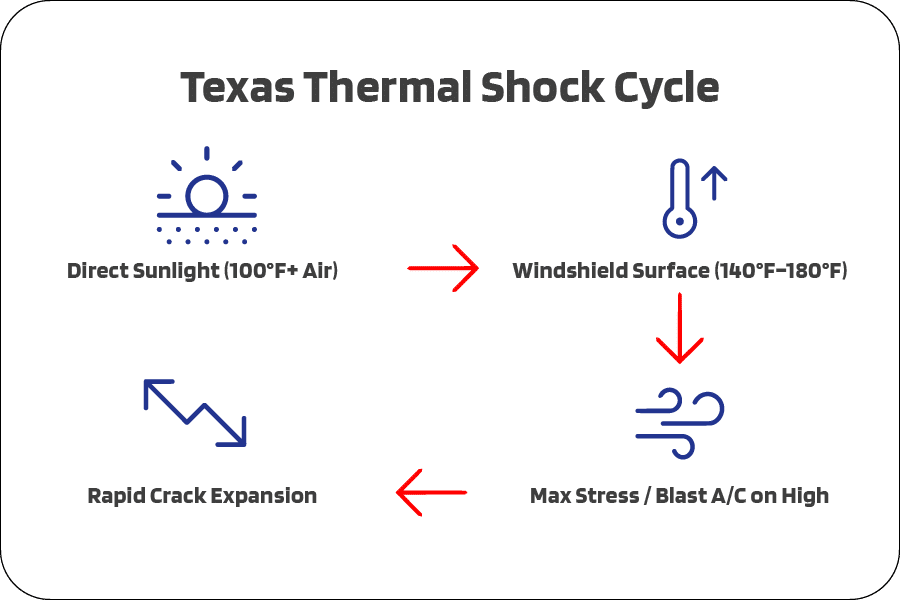
Under direct sunlight, your windshield outer layer can easily reach temperatures between 140°F and 180°F. The internal cabin heat trapped inside a closed car can climb above 130°F in less than 30 minutes.
The primary trigger for thermal shock occurs when drivers attempt to cool down their vehicles quickly. Stepping into a hot car and immediately turning the air conditioning on high sends cold air straight onto the hot interior surface of the windshield.
The glass attempts to contract on the inside while remaining expanded on the outside. This temperature differential produces mechanical tension. If a rock chip or tiny hairline fracture exists anywhere on the panel, the sudden contraction pulls the damaged area apart.
Daily Habits That Accelerate Windshield Cracks
While running maximum A/C onto a hot glass surface is the most common culprit, several other everyday summer routines in Texas trigger thermal shock:
- Cold Water Wash: Washing a car that has been parked in direct afternoon sunlight with cold hose water causes a temperature drop, snapping fragile chip edges.
- Defroster Usage During Humidity Drops: Running defroster cycles on high heat to clear overnight condensation before sudden midday temperature surges creates fluctuating surface tension.
- Abrupt Parking Transitions: Moving a vehicle directly from an air-conditioned garage out into 100-degree sun subjects the glass to surface expansion.
- Slamming Vehicle Doors: Closing doors forcefully when cabin air pressure is high exerts physical force against glass already under heat stress.
Beyond temperature fluctuations, physical force plays a supporting role in crack propagation. Vibrations from rough roads, highway speed bumps, and uneven pavement continuously flex the vehicle body. When a windshield is already under thermal stress, a minor road vibration triggers expansion along the fracture line.
Why Timely Windshield Repair Matters
A windshield does far more than keep bugs, rain, and road debris out of your face. In modern vehicles, the windshield is a structural safety component of the entire cabin design.

During a rollover accident, the windshield provides up to 45 percent of the structural strength required to keep the roof from collapsing. Additionally, passenger-side airbags rely directly on the windshield as a backstop wall to deploy correctly toward cabin occupants. If a crack compromises the glass, the airbag force can push the windshield outward instead of protecting the passenger.
Fixing a small chip right when it happens takes about 20 minutes and costs a fraction of a full glass replacement. Professional rock chip repair works by injecting a specialized, optically clear resin directly into the point of impact. The resin bonds the separated glass layers together, restores structural strength, and prevents thermal expansion from spreading the damage. Once a crack extends past several inches or reaches the edge of the glass frame, repair is no longer safe or viable, leaving full replacement as your option.
Simple Tips to Protect Your Windshield in the Heat
You can reduce the risk of thermal shock damage by adopting a few simple vehicle care habits during peak summer months:
- Park in the Shade: Whenever possible, park under covered structures, in garages, or beneath shade trees to minimize direct solar heating.
- Use Reflective Sunshades: Place a custom-fitting reflective sunshade across the inside windshield when parked outside. This blocks direct radiation and keeps internal cabin temperatures lower.
- Cool the Cabin Gradually: When getting into a hot car, roll down the windows for two minutes to let trapped hot air escape before turning on the air conditioner.
- Direct Airflow Away From Glass: Point dashboard A/C vents toward the cabin seats rather than up toward the glass surface during the initial cool-down phase.
- Address Chips Immediately: Never ignore a minor stone chip. Treating chips prevents thermal shock from turning a minor fix into a replacement.
Smart Auto Glass Care with Patriot Windshield Repair
When Texas heat threatens your vehicle’s safety, having a trusted local specialist makes all the difference. Patriot Windshield Repair provides fast, dependable auto glass services for Central Texas drivers. Lead technician Bryan Irvin holds professional certifications from Auto Glass Academy, Delta Kits, Sika, and DOW, helping ensure every repair and replacement meets industry safety standards.
Whether you need a quick 20-minute rock chip repair to stop a flaw from spreading or a complete mobile windshield replacement at your home or office, Patriot Windshield Repair delivers service across San Marcos, New Braunfels, Wimberley, and Kyle. We handle insurance claims directly to minimize hassle and out-of-pocket expenses, backed by a quality guarantee on all workmanship. Protect your safety and your budget by scheduling your appointment today.
FAQs
Can extreme heat alone crack a perfectly healthy windshield?
Extreme heat alone rarely cracks a completely healthy windshield without prior damage. However, severe temperature shifts create internal stress. If the glass has a microscopic chip, manufacturing flaw, or edge defect, high heat and rapid cooling will quickly turn that hidden flaw into a visible crack.
How long does a standard rock chip repair take?
A professional rock chip repair typically takes only 20 minutes to complete. The technician cleans the impact area, removes trapped air, injects a high-grade resin, and cures it under ultraviolet light to fully stabilize the glass structure.
Why shouldn’t I turn my A/C on high immediately in a hot car?
Running maximum cold air onto glass heated to 150°F or more creates temperature contrast across the two sides of the panel. This rapid thermal shock causes the glass to contract unevenly, forcing existing chips or small cracks to spread across the windshield.
Will my vehicle insurance cover rock chip repair costs?
In many cases, yes. Most auto insurance policies with comprehensive coverage cover rock chip repair completely with zero deductible. Insurance providers prefer paying for a fast chip repair over funding a far more expensive full windshield replacement later.
Can a long crack across the windshield be repaired without full replacement?
Once a crack extends beyond 6 inches or reaches the outer edge of the windshield frame, the structural integrity of the glass is permanently compromised. At that stage, a full windshield replacement is necessary to ensure safety and proper structural support for your vehicle.